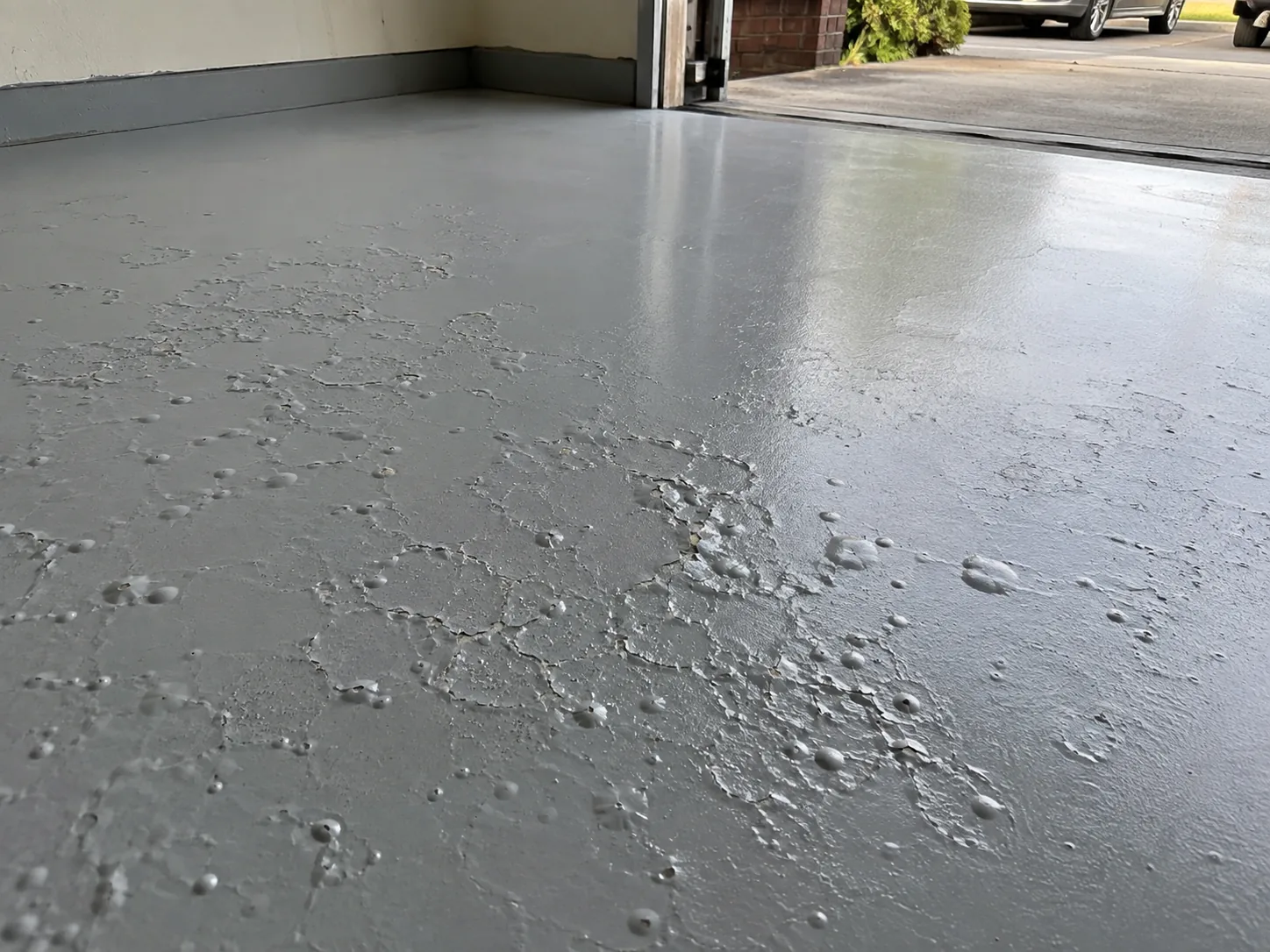
A basement floor coating solves different problems than a garage system. Downstairs the headline risks are moisture vapor, efflorescence, cool slab temperatures, and how the room will be used — gym, laundry, storage, or finished living space — not hot tires and road salt. People searching basement epoxy floor or epoxy basement floor cost still need the same honesty on prep: if vapor drive is ignored, the prettiest flake job becomes a blister map.
We coat utility basements, home gyms, workshops, and finished lower levels across Wichita and nearby communities when the slab tests within a workable range or when mitigation is part of the scope. Pair this page with moisture testing and vapor barrier and the cost guide for national $/sq ft context.
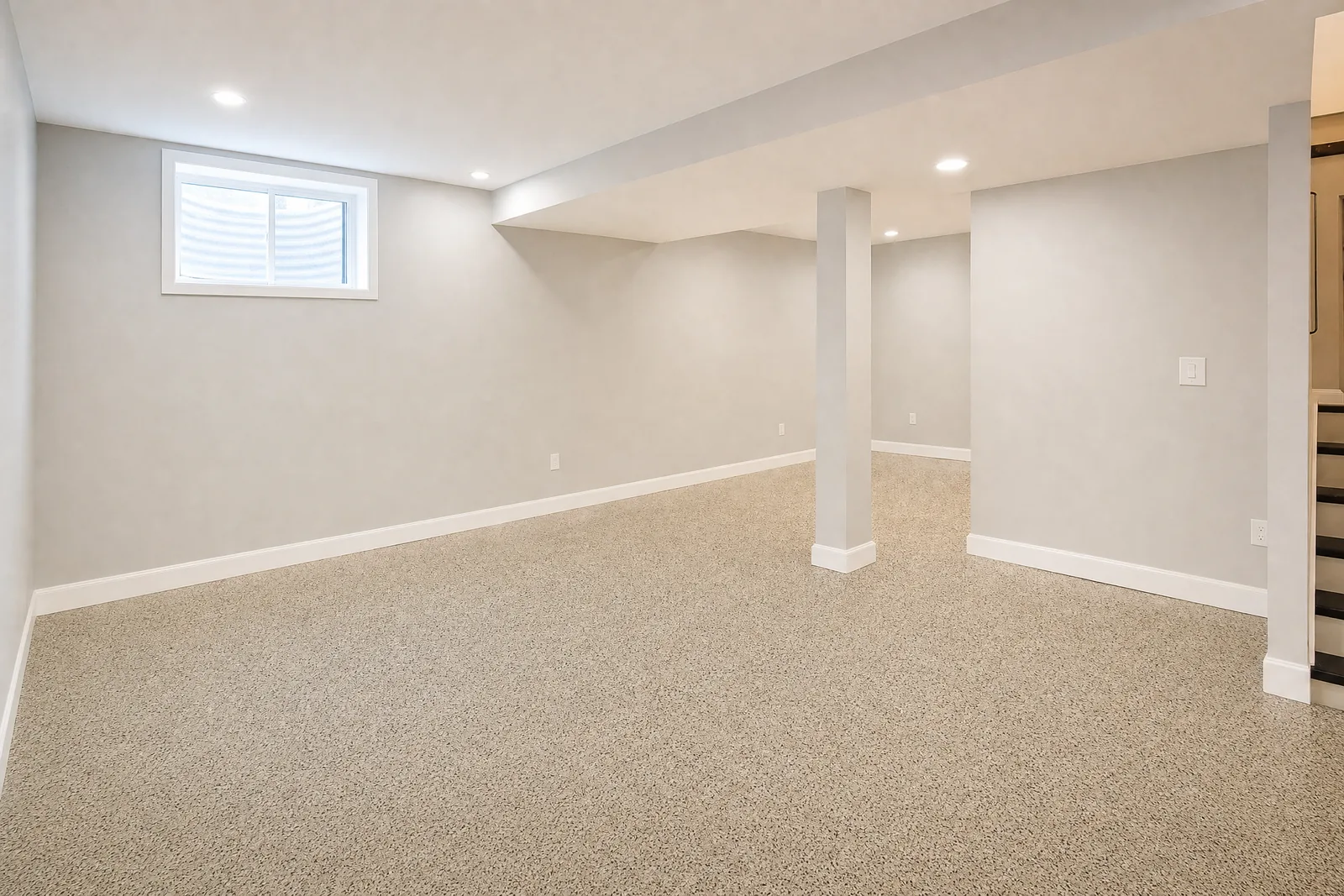
Why basement slabs behave differently
- Vapor drive. Concrete on grade pushes moisture upward. A dense coating can trap vapor and blister if the rate exceeds what the system and primer can handle.
- Efflorescence. White mineral deposits signal moisture moving through the slab or walls. Coating over active efflorescence without fixing the water path is cosmetic theater.
- Cool temperatures. Basements run cooler than garages; cure schedules stretch. Product choice has to match ambient and surface temperature on install day.
- Limited ventilation. Odor management and cure still matter even with low-VOC systems.
- Drains, sumps, and perimeter details. Coatings must terminate cleanly at drains and junctions; they are not a substitute for a failing drain tile system.
Moisture vapor testing before any basement epoxy floor
We test rather than guess. Common field approaches include calcium chloride-style MVER tests and in-situ relative humidity probes, depending on the slab and the system manufacturer’s requirements. Results decide whether we proceed with a standard primer, a moisture-mitigating primer, a different system, or a recommendation to address bulk water first.
If you already see damp corners after rain, rusted washer feet, or musty baseboards, say so at booking. Photos help; meters decide.
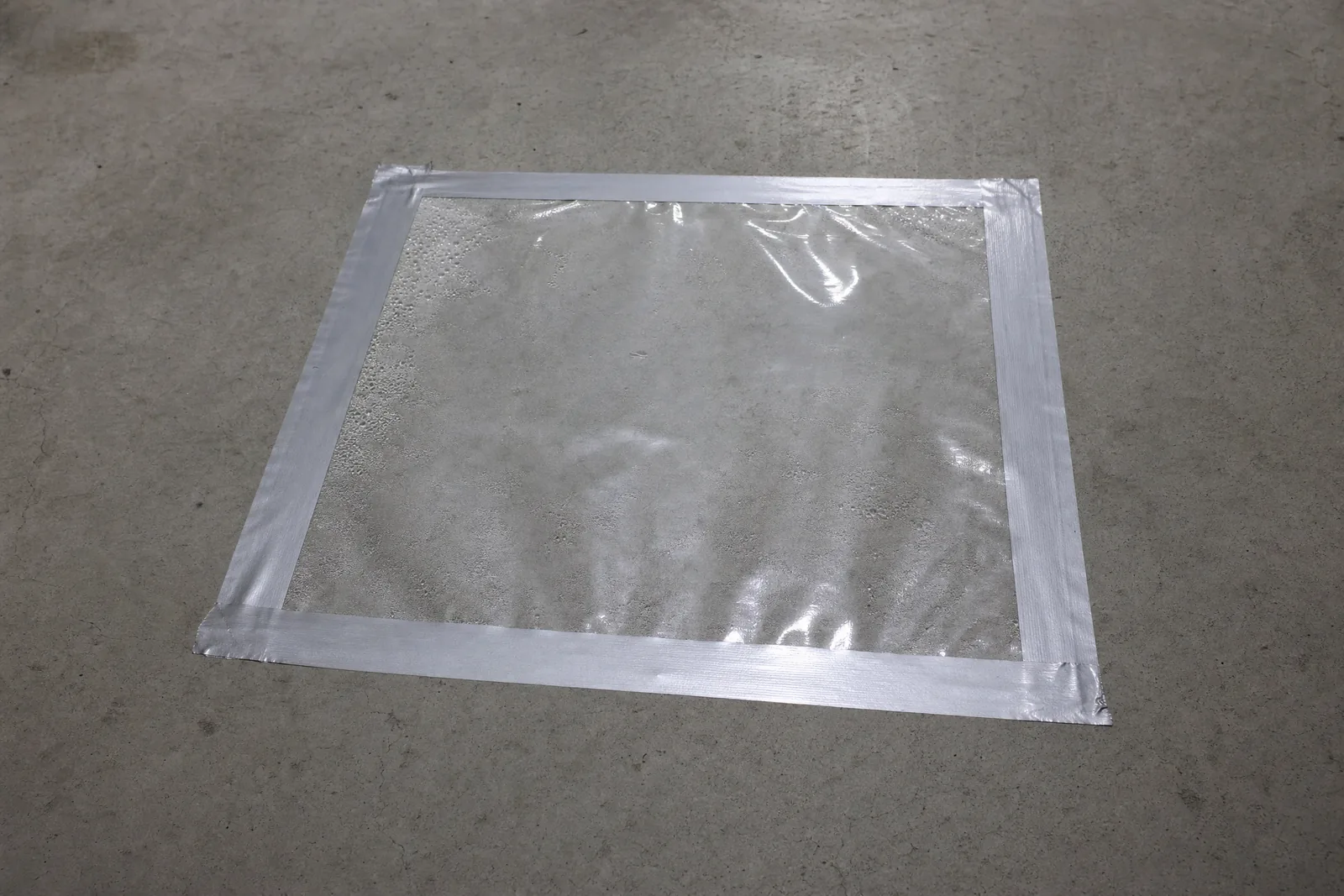
Efflorescence, seepage, and when not to coat yet
White powdery deposits, tide marks on block walls, and water at the wall-floor joint are bulk-water symptoms. A floor coating does not fix hydrostatic pressure through a wall crack or a clogged exterior drain. We will tell you when a waterproofing contractor or drainage fix should come first. Coating a slab that is actively weeping is how you buy a peel.
Sump pits, floor drains, and penetrations
Detailing matters more downstairs than in many garages:
- Clean terminations at sump lids and drain flanges
- No bridging of joints that must remain open
- Compatible sealants where the coating meets dissimilar materials
- Clear plan for floor drains in laundry and shop basements
If your basement has a history of backup, address plumbing before aesthetics.
Systems that make sense downstairs
Solid color epoxy or polyurea body with tough topcoat
Bright, cleanable, good for laundry and storage. Shows dust more than flake; easy to mop.
Flake broadcast systems
Hide stains and small repairs; popular for home gyms and rec rooms. Use a topcoat with appropriate abrasion resistance for weights and caster traffic.
Quartz / anti-slip
Where water splash is routine — near showers in basement baths, or exterior stair wells that drain inward.
Moisture-tolerant primers and mitigation systems
When tests are elevated but within a manufacturer’s mitigable range. Outside that range, we decline decorative work until conditions change.
Garage-oriented hybrids from our garage floor coating page still apply, but UV is usually less critical downstairs than vapor and temperature.
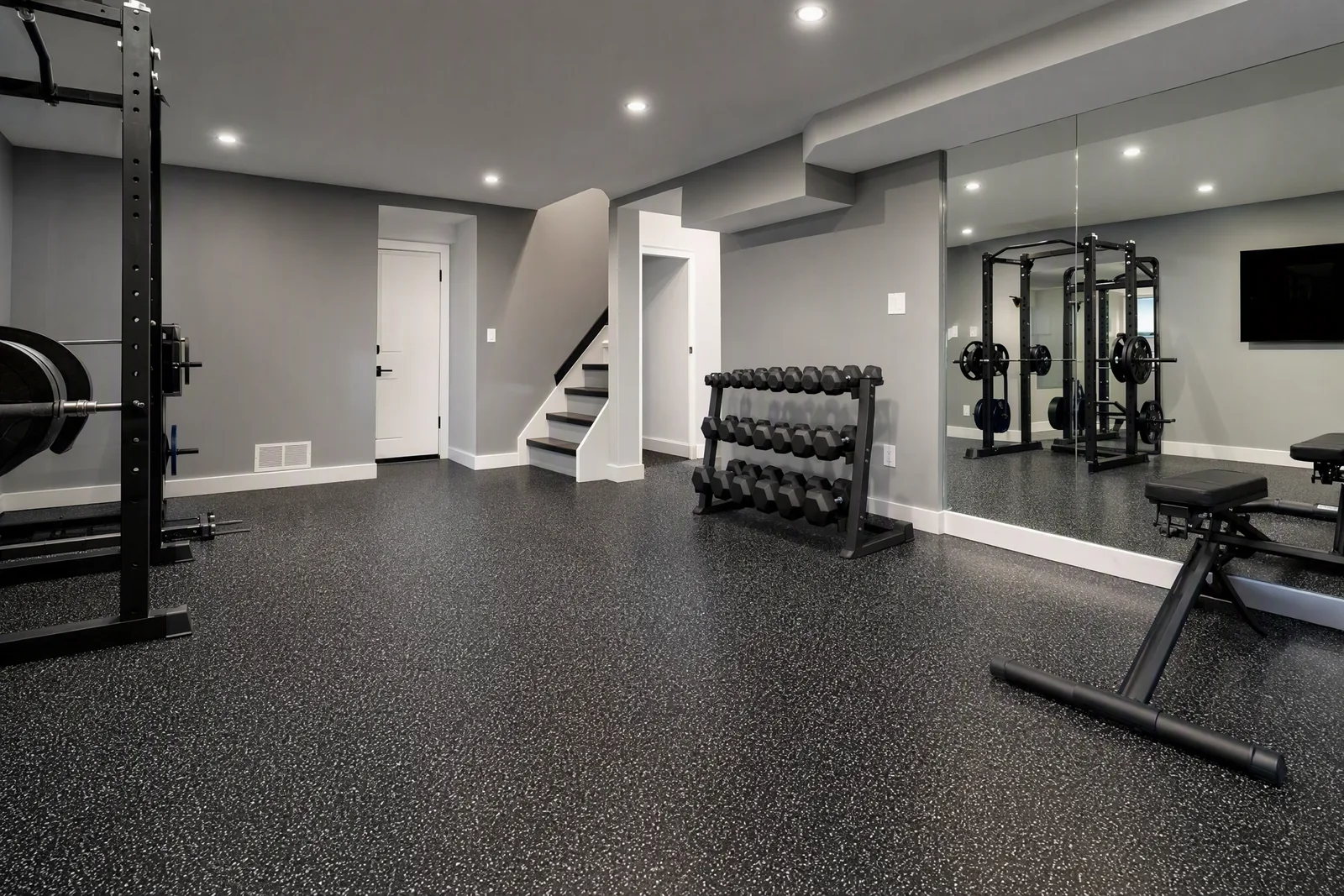
Finished basement use cases
- Home gyms — impact pads help; casters and dropped weights are the wear story.
- Play / media rooms — comfort underfoot and cleanability; consider texture vs smooth.
- Workshops — chemical spills and tool stands; see also shop floor epoxy.
- Laundry / utilities — drains, detergent resistance, ease of mopping.
- Guest suites — quieter, warmer feel sometimes favors other floor coverings; coating is still excellent in wet-capable zones.
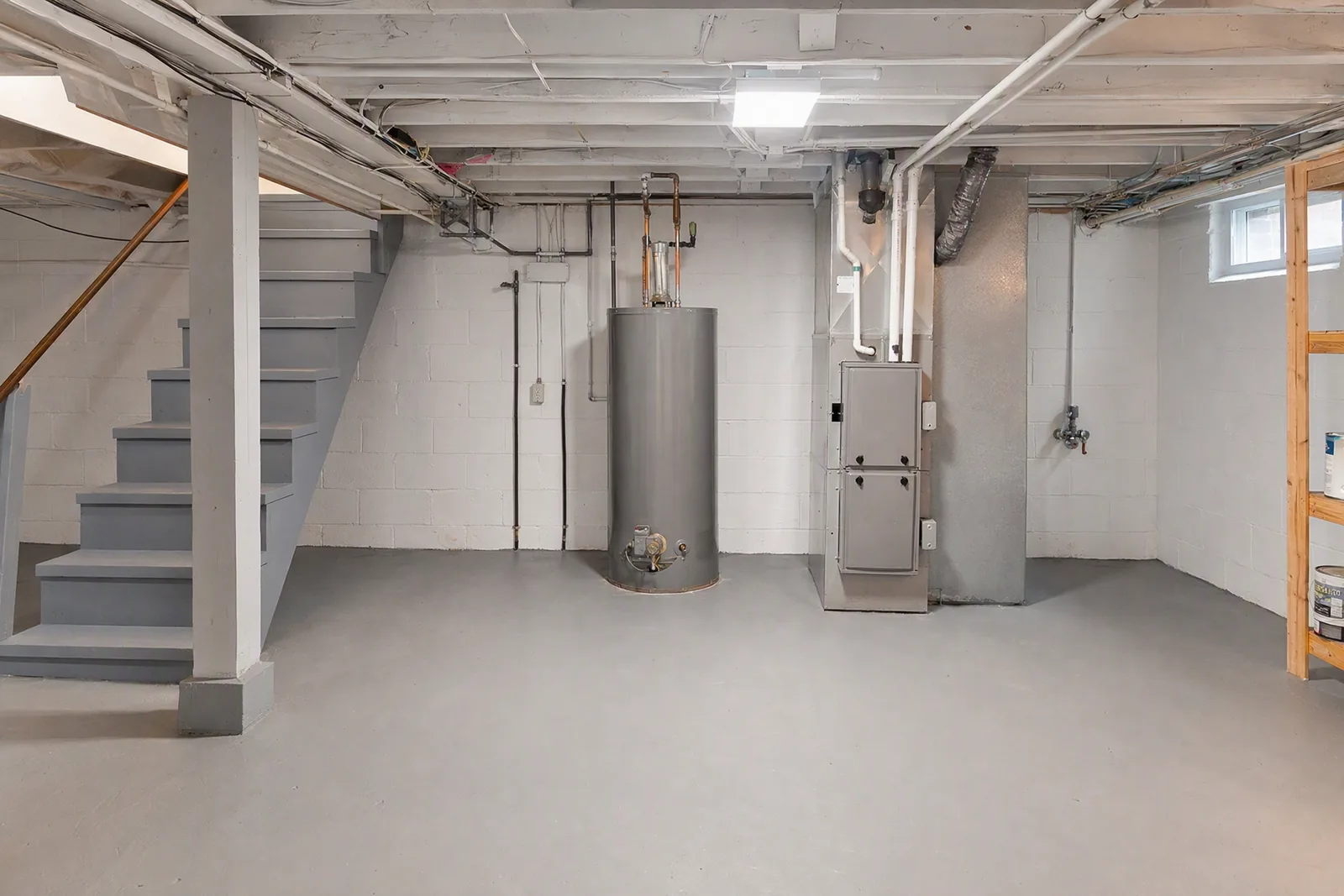
Epoxy basement floor cost (typical national ranges)
Basement coatings generally track the same public per-square-foot bands as other interior epoxy work. HomeGuide’s epoxy flooring guide discusses basement projects across wide total ranges depending on size (their location table cites basement square footages from hundreds to a couple thousand square feet with installed totals spanning roughly low thousands into much higher figures on large spaces). Per-square-foot, plan from the same national epoxy/coating bands discussed on our cost page — often roughly $4–$12 / sq ft class figures for professional coatings in HomeGuide’s framing, with Angi’s broader about $2–$12 epoxy discussion as another public reference — then add contingency for moisture mitigation and crack repair.
A small utility basement can look affordable until mitigation is required; a large finished lower level multiplies square footage fast. Always get an on-site quote after testing rather than multiplying an online calculator by unfinished square footage from the listing sheet.
More cost context: garage floor coating cost (same $/sq ft logic) and epoxy vs polyaspartic for chemistry premiums.
Prep sequence downstairs
- Visual moisture and intrusion assessment
- Formal vapor / RH testing as required
- Diamond grinding with dust control
- Crack and joint detailing
- Mitigation primer if specified
- Body coat, optional broadcast, topcoat
- Cure schedule matched to cool ambient temperatures
Related: grinding, crack repair, removing failed coatings.
Radon, sealed floors, and expectations
A coating is not a certified radon mitigation system. If you have a radon system or are installing one, coordinate terminations and penetrations so the floor film does not fight the mitigation design. Ask your radon contractor and us to talk before install day if both trades are in play.
Communities
- Wichita and south-central Kansas service areas
- Derby, Andover, Goddard, Maize, and nearby cities
Basement vs garage coating: decision checklist
- Has the basement ever taken water from walls or drains? If yes, solve bulk water before decorative coating.
- Is the space heated year-round? Cold slabs change cure windows.
- Will you drop weights, roll racks, or park a mower downstairs? Match abrasion and impact.
- Do you need a warmer feel underfoot? Coatings are hard; rugs or interlocking tiles in living zones can pair with coated utility zones.
- Are you comparing epoxy basement floor cost to LVP or carpet? Factor moisture risk: some soft floorings fail faster than a tested coating in damp lower levels.
What we need from you before the measure
- Approximate square footage and ceiling height photos
- Photos of corners, sump, and any white deposits
- Notes on past water events
- How the room will be used in the next five years
That package lets us bring the right tests and sample boards the first visit. For chemistry trade-offs that still apply downstairs, see polyaspartic vs epoxy.
Aftercare in finished basements
Use soft pads under furniture feet; lift rather than drag heavy safes or cabinets; mop with neutral cleaner; keep dehumidifier settings reasonable if the space is finished. A coating makes cleaning easier; it does not replace humidity control in a tight lower level. See care and warranty.
Illustrative layout zones
Many Wichita finished basements mix zones on one slab: a harder coated gym strip along one wall, a solid utility run by the mechanical room, and a living area that keeps the same film for continuity. Zoning texture and color in one pour keeps transitions clean and avoids trip edges from mixed flooring heights. Ask for a simple zone sketch on the quote when the room does more than one job.
Common questions
Can you epoxy a basement with moisture issues?
Sometimes, with mitigation, when tests fall within a system’s rated range. Active seepage or failed exterior drainage needs fixing first. We will decline work that is set up to fail.
How much does an epoxy basement floor cost?
Use the same national per-square-foot bands as other epoxy coatings (commonly discussed around roughly $4–$12 / sq ft class ranges in HomeGuide coating guides, with other publishers publishing wider or higher bands), then budget extra for moisture work. Large finished basements multiply quickly — measure and test before locking a remodel budget.
Is flake or solid better downstairs?
Flake hides more; solid looks cleaner and brighter in utility rooms. Gyms often prefer flake or quartz for wear camouflage.
How long before we can use the basement again?
Cooler temps slow cure. Foot traffic may return in a day-class window on some systems; heavy furniture and gym gear follow the written schedule.
Will coating stop musty smells?
It can reduce dusting and make mopping effective, but musty air often means moisture or HVAC issues beyond the floor film. Fix the water story.
Ready for a basement floor that stays clean and bonded?
Free on-site measure, moisture assessment, and a written quote — including an honest no when the slab is not ready.
Call 316-799-3692 Request a quote online