Shop floor epoxy, warehouse epoxy flooring, and commercial epoxy flooring are built for loads a house garage rarely sees: jack stands, pallet jacks, ag equipment, oil and solvent spills, steel shavings, and all-day caster traffic. The chemistry family overlaps residential systems; the specification usually does not. Film build, slip resistance, chemical resistance, and downtime planning drive the quote.
We coat home shops, pole barns, detached garages used as workshops, light manufacturing bays, storage warehouses, and equipment sheds around Wichita and south-central Kansas. For larger industrial programs, start also from commercial and industrial flooring and workshops and warehouses. Residential-adjacent shops should still read garage floor coating for prep fundamentals.
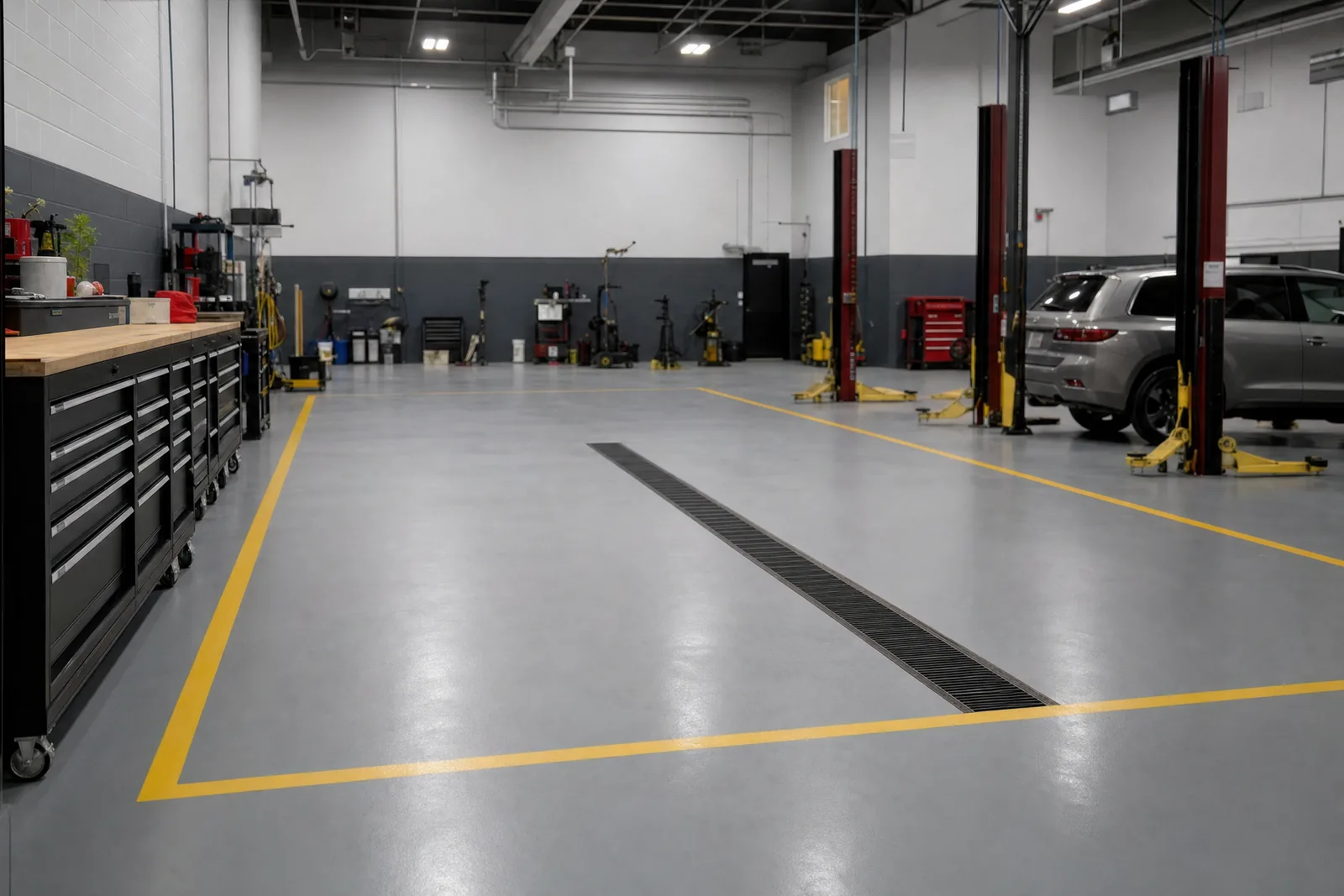
Where shop floor epoxy earns its keep
- Home shops and hobby machine spaces — oil, hot metal, rolling tool chests
- Detached garages converted to workshops — still a slab on grade; moisture rules apply
- Pole barns and ag / equipment shops — wide temperature swings, mud, diesel, hydraulic fluid
- Light commercial service bays — tire shops, small auto service, fabrication
- Warehouse epoxy flooring for storage, staging, and light fulfillment
- Commercial epoxy flooring in back-of-house zones that need cleanability and striping
Performance requirements vs a house garage
| Demand | Typical house garage | Shop / warehouse |
|---|---|---|
| Point loads | Jack stands occasionally | Lifts, presses, pallet jacks, equipment outriggers |
| Chemicals | Oil drips, salt | Solvents, brake fluid, fertilizers, coolants |
| Abrasion | Tire dust | Metal shavings, grit, continuous wheeled traffic |
| Slip risk | Wet door threshold | Wash-down zones, oil film, outdoor track-in |
| Downtime cost | Inconvenient | Lost billable hours / shipping delays |
| Markings | Optional | Safety striping, aisle marks, walk paths |
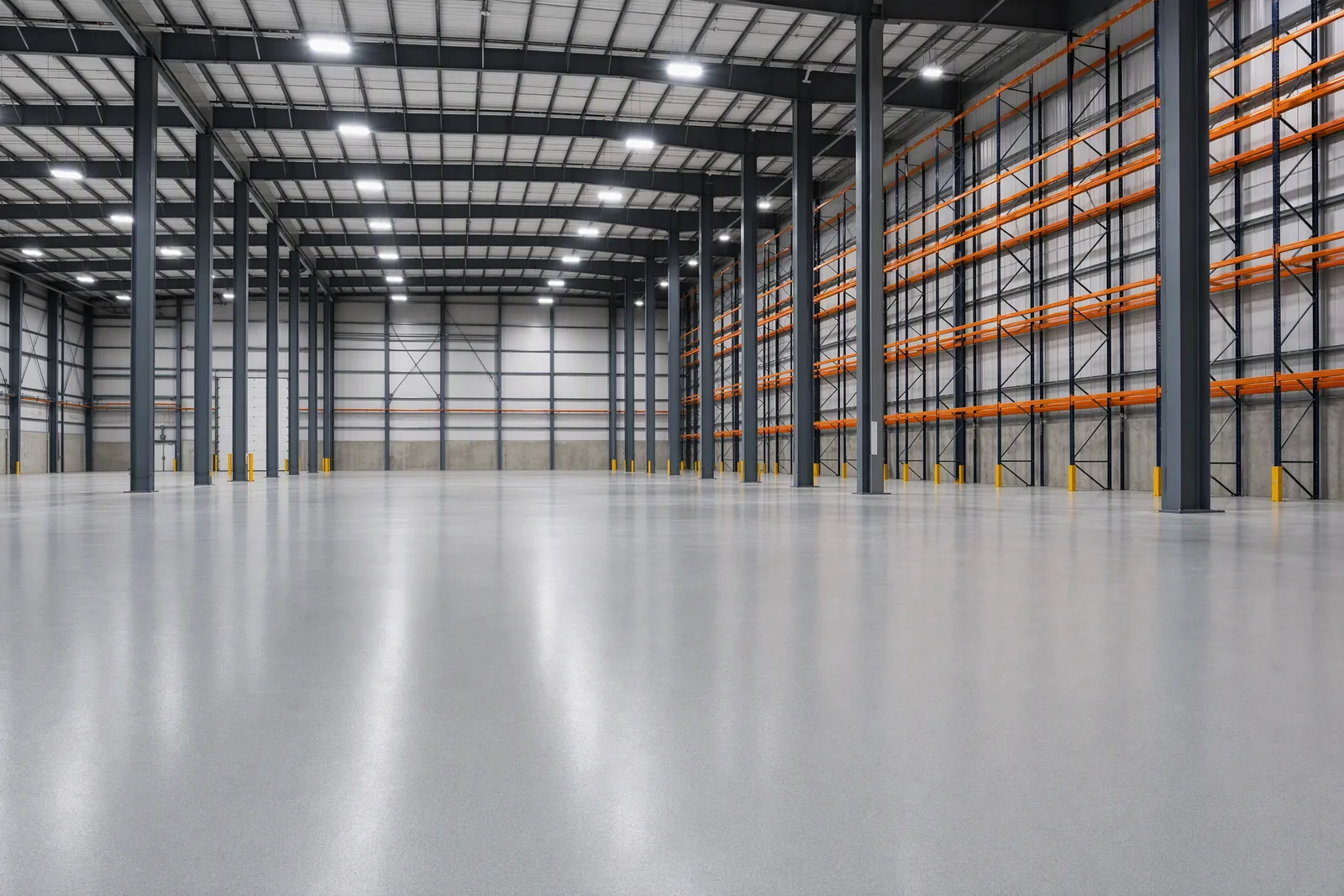
Thicker systems, primers, and topcoats
Shop floors often need more than a thin decorative film:
- Higher build body coats for impact and wear
- Chemical-resistant topcoats matched to the spills you actually have (bring the SDS list to the measure)
- Quartz or grit in wash-down and entry lanes — see quartz and anti-slip
- Solid colors for visibility of leaks and for clean professional appearance — see solid color epoxy
- Flake where you want to hide staining in a home shop without going full industrial grey
- Coved base in wash-down or food-adjacent spaces where walls must clean with the floor
Chemistry choice still matters: epoxy build with a tough urethane or polyaspartic wear coat is common; some industrial specs call for novolac or other chemical-resistant epoxies in spill zones. Compare families on epoxy vs polyaspartic vs polyurea.
Heavy equipment, lifts, and point loads
Coatings are not structural slabs. If a four-post lift or press concentrates load on small pads, we detail those areas, confirm the concrete can carry the equipment, and avoid promising a thin film will “fix” a weak slab. Outrigger pads and crib areas may get extra build or sacrificial sheets depending on use. Tell us about lifts, welders, CNC machines, and forklift traffic at the quote visit.
Oil, solvents, and surface prep in working shops
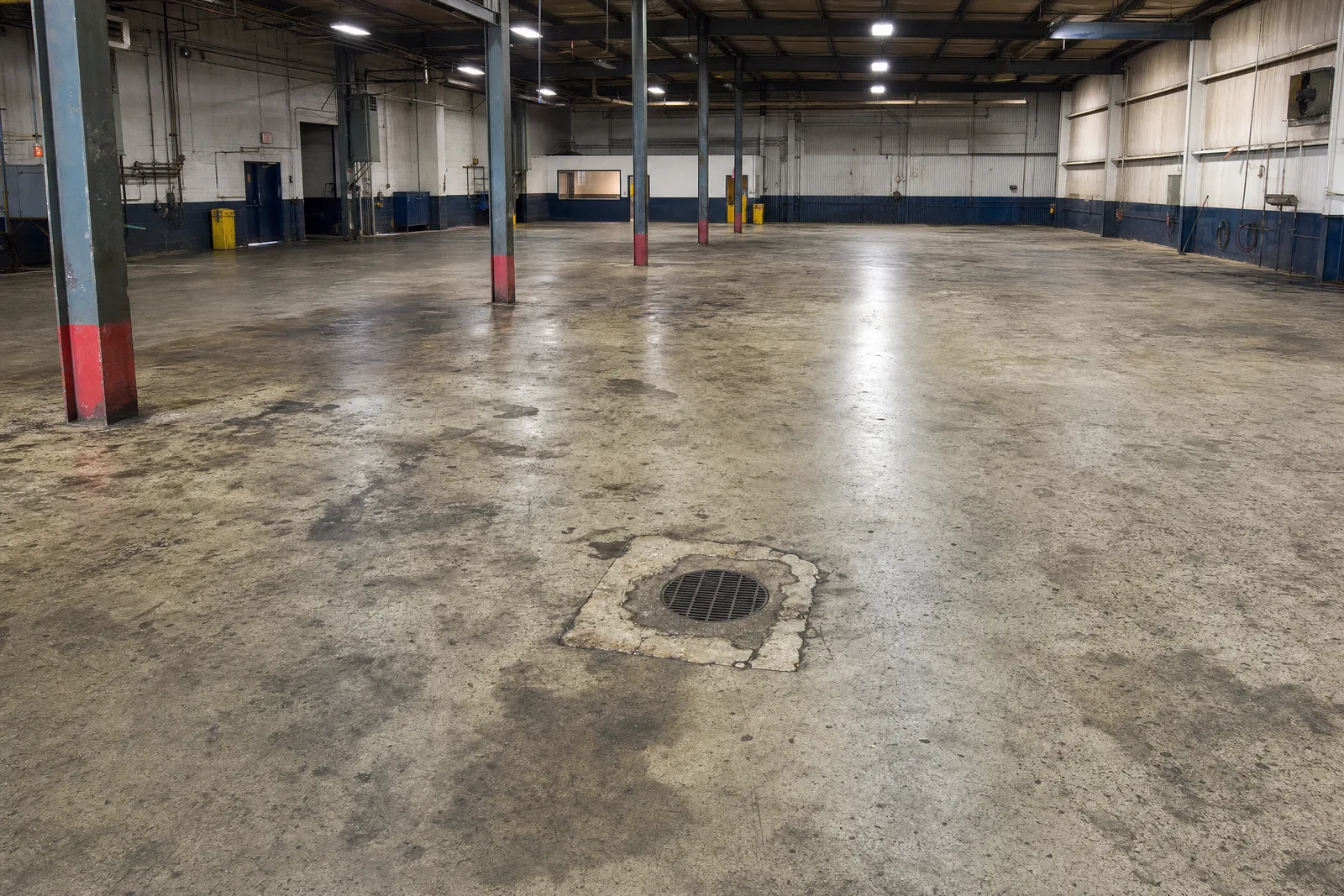
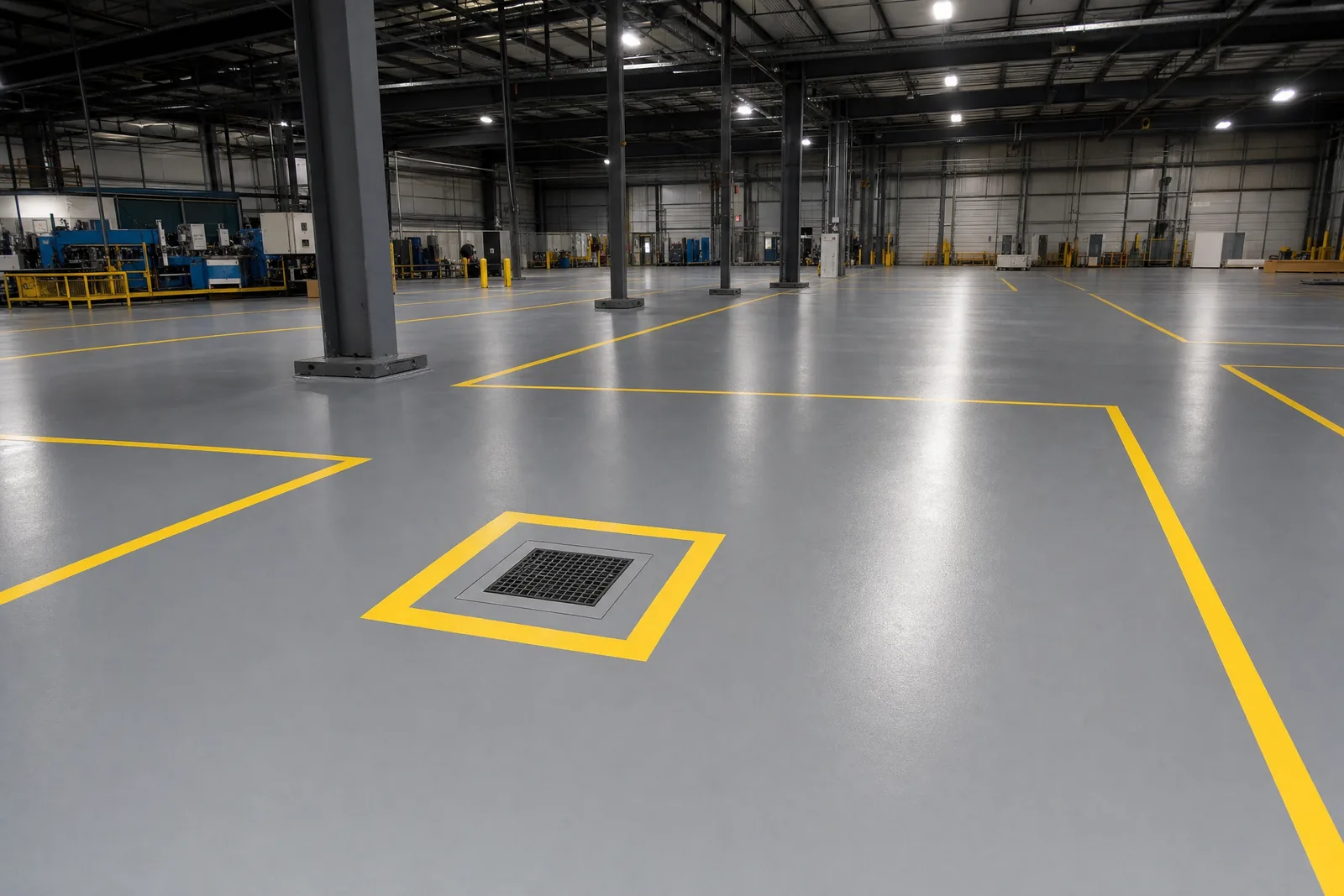
Years of oil soak cannot be painted over. Diamond grinding, degreasing, and sometimes deeper remediation are required before resin will bond. Skipping that step is the most common reason commercial-looking DIY jobs fail in month one. Failed prior coatings need removal — removing failed coatings. Cracks from equipment traffic get the same routing and fill discipline as residential work — crack and spall repair.
Anti-slip without making cleaning impossible
Aggressive texture helps in wash bays and at overhead doors where rain tracks in. Too aggressive and you fight mopping and catch metal chips. We usually zone the floor: smoother in open shop space, more texture in wet lanes. Sample boards beat adjectives.
Cost ranges for shop and warehouse floors
Start from the same public national bands used for garage coatings — HomeGuide’s roughly $4–$12 per square foot garage coating framing and epoxy often around $4–$10, Angi’s broader professional epoxy discussion around $2–$12 per square foot — then expect shop work to climb when you add:
- Heavy oil remediation and grinding time
- Thicker industrial film builds
- Chemical-resistant topcoats
- Quartz broadcast in wet zones
- Line striping and stencils
- Night/weekend installs to protect uptime
- Moisture mitigation on large on-grade warehouse slabs
A 600 sq ft home shop might still land near residential math if the slab is clean. A 8,000 sq ft warehouse with phased shutdowns is a different project class — priced by phase, not by a garage calculator. See cost guide for per-sq-ft context and call for a walkthrough bid on anything with equipment in place.
Planning tip: Measure clear floor area, list chemicals used monthly, photo the worst oil spots, and note whether work must continue during install. That package produces a faster, more accurate quote than square footage alone.
Phasing and downtime
Many shops cannot go dark for a week. Polyaspartic-forward schedules can shorten return-to-service versus classic epoxy (HomeGuide summarizes faster cure windows for polyurea/polyaspartic-class systems versus longer epoxy cures). We also phase large spaces by aisle or bay so forklifts keep moving. After-hours work is available for light commercial sites when noise and access allow.
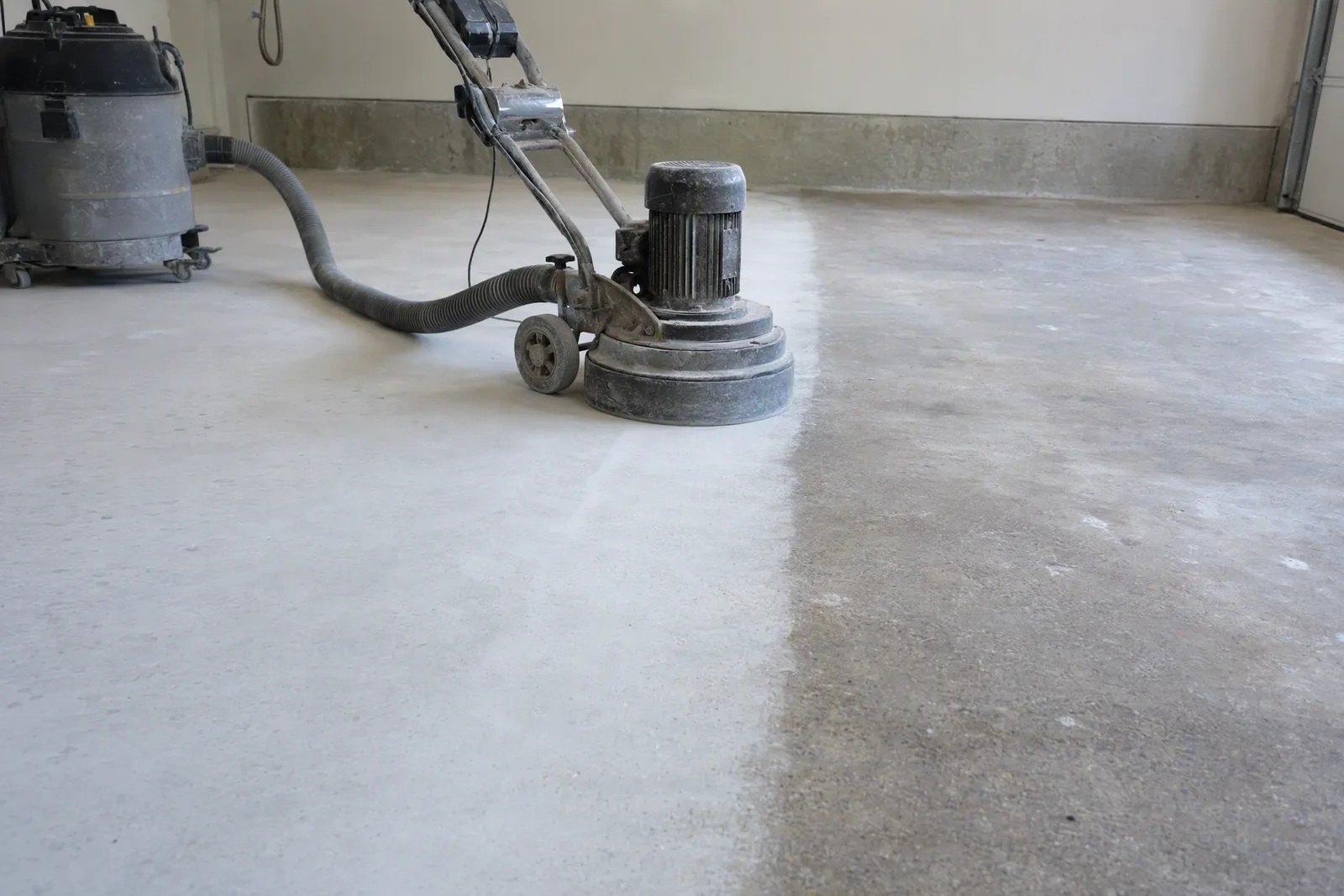
Pole barns and unconditioned spaces
Temperature swings in metal buildings affect cure and joint movement. Winter installs may need temporary heat; summer installs watch working time on fast products. Dust from gravel drives tracks in constantly — plan a walk-off zone and a topcoat you can mop. UV near big open bay doors still argues for aliphatic clears on those exposures.
How a shop quote visit runs
- Walk the slab: cracks, spalls, oil, prior coatings, drains
- Discuss chemicals, equipment loads, wash-down habits
- Moisture testing plan on on-grade slabs
- System recommendation (build, texture, color, striping)
- Phasing / downtime plan
- Written scope with exclusions
Related reading: install day, grinding, moisture testing.
Communities and building types we see
- City and county shops around Wichita, Derby, Andover, Goddard, Maize, Bel Aire, Park City, Haysville, Valley Center
- Rural pole barns and ag buildings in the surrounding DMA
- Detached home workshops tied to residential properties
Home shop vs commercial shop: same visit, different spec
A 24×30 detached shop behind a Wichita home can often use a residential-grade flake or solid system with a stronger topcoat and optional grit at the door. A commercial service bay that sees daily vehicle turnover usually wants solid color for leak visibility, chemical-resistant clears, and striping. We do not force a warehouse system onto a hobby shop — or a decorative flake system onto a floor that sees acetone every afternoon.
If you are unsure which category you are in, describe the worst spill of the last year and the heaviest thing on wheels. That answers more than square footage.
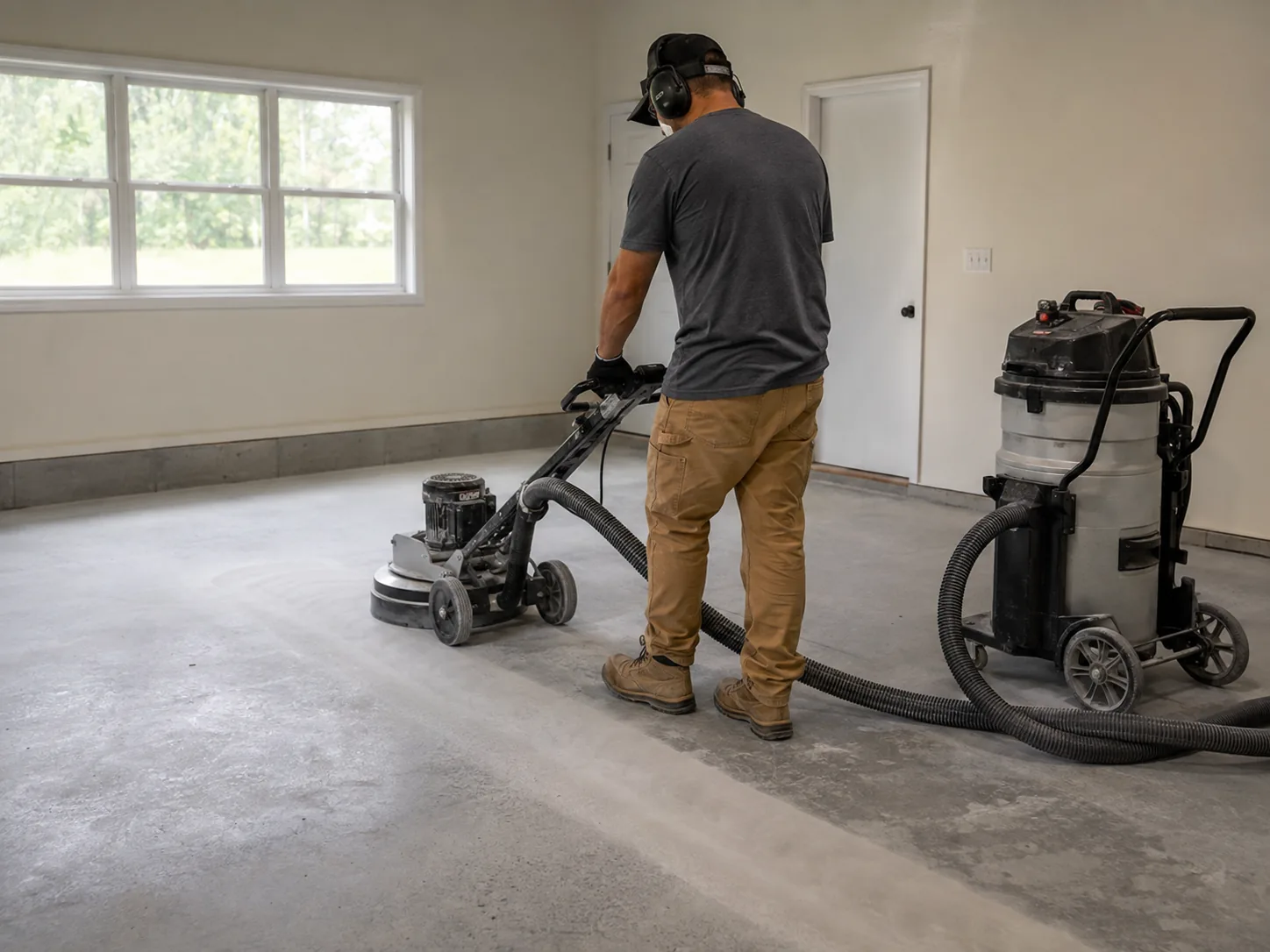
Maintenance after install
Sweep or dust-mop abrasive grit; mop with neutral cleaner; wipe chemical spills promptly; put sacrificial mats under battery charging or known drip points. Avoid harsh citrus strippers and abrasive powders that frost a clear topcoat. A well-built shop floor should make cleanup faster, not create a museum piece you are afraid to use. Care basics also appear on care and warranty.
Linking garage, basement, and shop decisions
Many properties need more than one system: house garage for cars, basement for gym storage, detached shop for fabrication. Moisture rules downstairs, UV and salt in the garage, chemicals in the shop. Start with the room that wastes the most time on cleanup, then sequence the others. Cost planning: coating cost guide.
What success looks like six months later
Oil spots wipe instead of staining into grey concrete. Sweeping takes minutes. Jack-stand dents are absent or limited to intentional pads. Striping still reads under shop dust. If those outcomes matter more than a showroom swirl, you are in shop-floor territory — and a honest industrial-leaning spec will beat a decorative kit every time.
Common questions
Is shop floor epoxy different from garage epoxy?
Same resin families, different spec: usually more build, more chemical resistance, more attention to texture zones and downtime. A residential flake system can work in a light home shop; a busy service bay needs a tougher stack-up.
Can you coat around a lift?
Often yes, with detailing at baseplates and a plan for moving arms or vehicles. Some lift companies have clearance and anchoring requirements we respect.
Will epoxy hold up to brake fluid and solvents?
Standard decorative epoxies vary. Spill chemistry should drive topcoat selection; bring product names to the measure. Wipe spills promptly regardless of system.
How much does warehouse epoxy flooring cost?
Use national $/sq ft coating bands as a floor, then add prep, thickness, striping, and phasing. Large spaces are bid from a site visit, not a one-car garage calculator.
Do you add safety striping?
Yes — aisle marks, hazard stripes, and simple stencils are common add-ons on commercial epoxy flooring projects.
Ready for a shop floor that cleans up and holds up?
Free on-site measure for home shops, pole barns, and light commercial bays — with a downtime plan you can work around.
Call 316-799-3692 Request a quote online