Searches for polyaspartic vs epoxy, polyaspartic floor coating, and polyurea garage floor coating are really one question: which chemistry belongs on a Kansas garage slab, and where? The short version used on most durable residential floors here is a hybrid — epoxy or polyurea for build and bond, an aliphatic polyaspartic floor coating as the wear surface — not a religious allegiance to one resin for every layer.
If you only compare marketing sheets, epoxy looks cheaper and polyaspartic looks tougher. If you compare install windows, UV behavior, flexibility, and how long the floor lasts under hot tires and winter salt, the trade-offs get clearer. For money specifics, pair this page with garage floor coating cost. For the full coating process, see garage floor coating & epoxy floors.
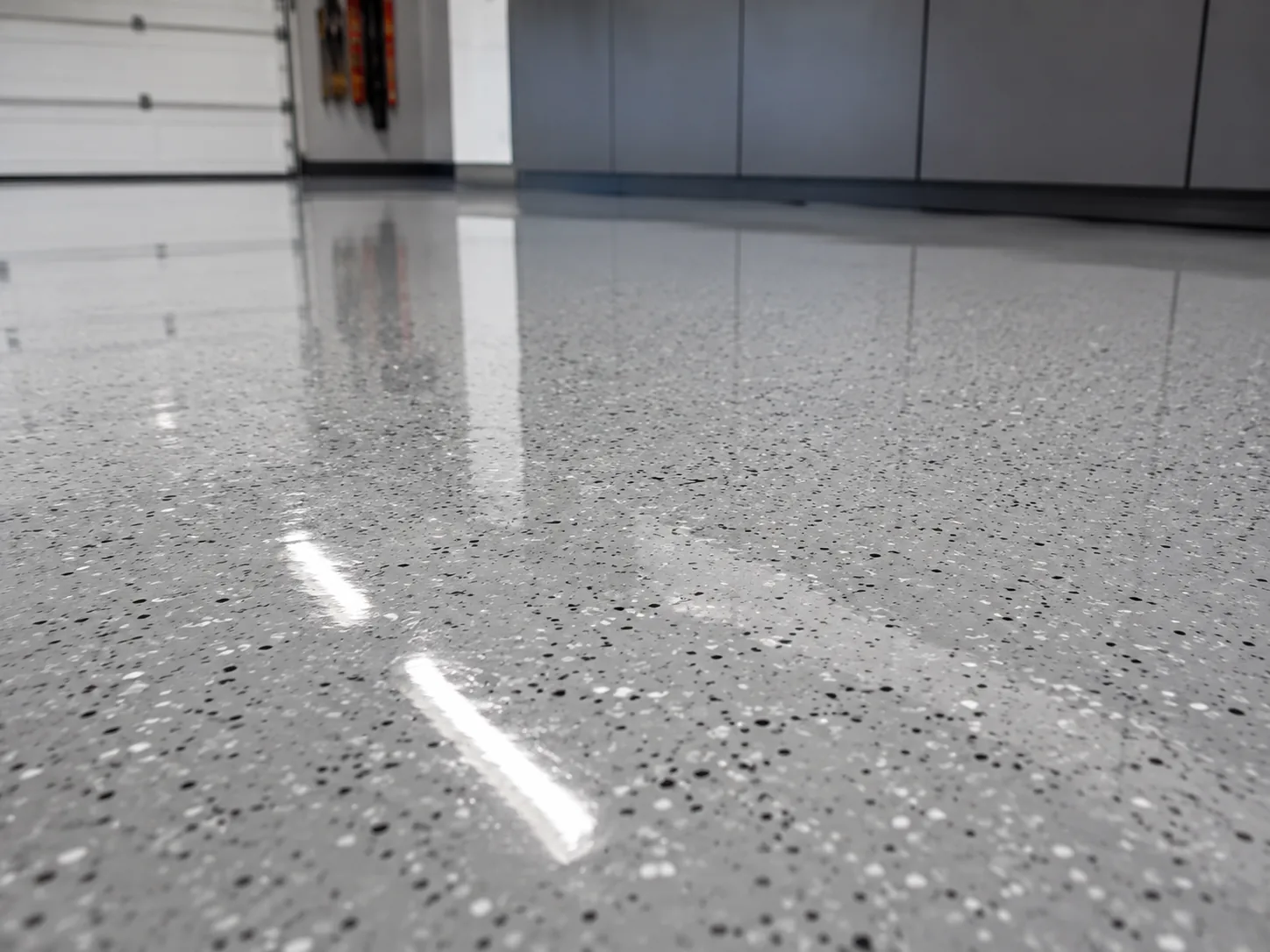
The short version
- Epoxy — excellent adhesion and film build, longer working time, generally lower material cost. Weaknesses: UV ambering (especially aromatic epoxies), slower full cure, can be softer under hot tires without a hard topcoat.
- Polyaspartic — aliphatic grades offer strong UV stability, fast cure, high abrasion resistance. Weaknesses: shorter working time, higher material cost, less forgiving for inexperienced installers.
- Polyurea — very fast, tough, often used in body coats and crack fillers; formulations vary widely. Some are aromatic (UV-sensitive) and need an aliphatic cap.
HomeGuide’s lifespan notes commonly put water-based epoxy at the short end of service life and polyurea/polyaspartic-class systems in longer 10–20+ year bands when installed correctly — which matches field experience when prep is honest.
Comparison table
| Factor | Epoxy | Polyaspartic | Polyurea |
|---|---|---|---|
| Typical install cost (national guides) | Often ~$4–$10 / sq ft (HomeGuide epoxy) | Often ~$5–$12 / sq ft (HomeGuide) | Often ~$5–$10 / sq ft (HomeGuide) |
| Working time | Longer — easier to roll large areas | Short — skilled, fast crews | Very short on many formulas |
| Cure / return to service | Often multi-day before vehicles | Often same day / next day foot; vehicles sooner than classic epoxy | Among the fastest |
| UV stability | Poor to fair without aliphatic topcoat; ambers in sunlight | Strong when aliphatic | Depends — aromatic needs aliphatic cap |
| Flexibility / impact | Hard, can be brittle in cold if wrong system | Generally tougher wear surface | Can be formulated very flexible (crack fillers) |
| Hot tire resistance | Needs hard topcoat | Generally strong | Generally strong |
| Best role in a Wichita garage | Body coat / build | Clear wear coat / full systems when schedule is tight | Body coat, crack fill, some full systems |
| How long does epoxy floor last? | Wide band; light films short, solid systems longer with prep | Often cited in longer service bands | Often cited in longer service bands |
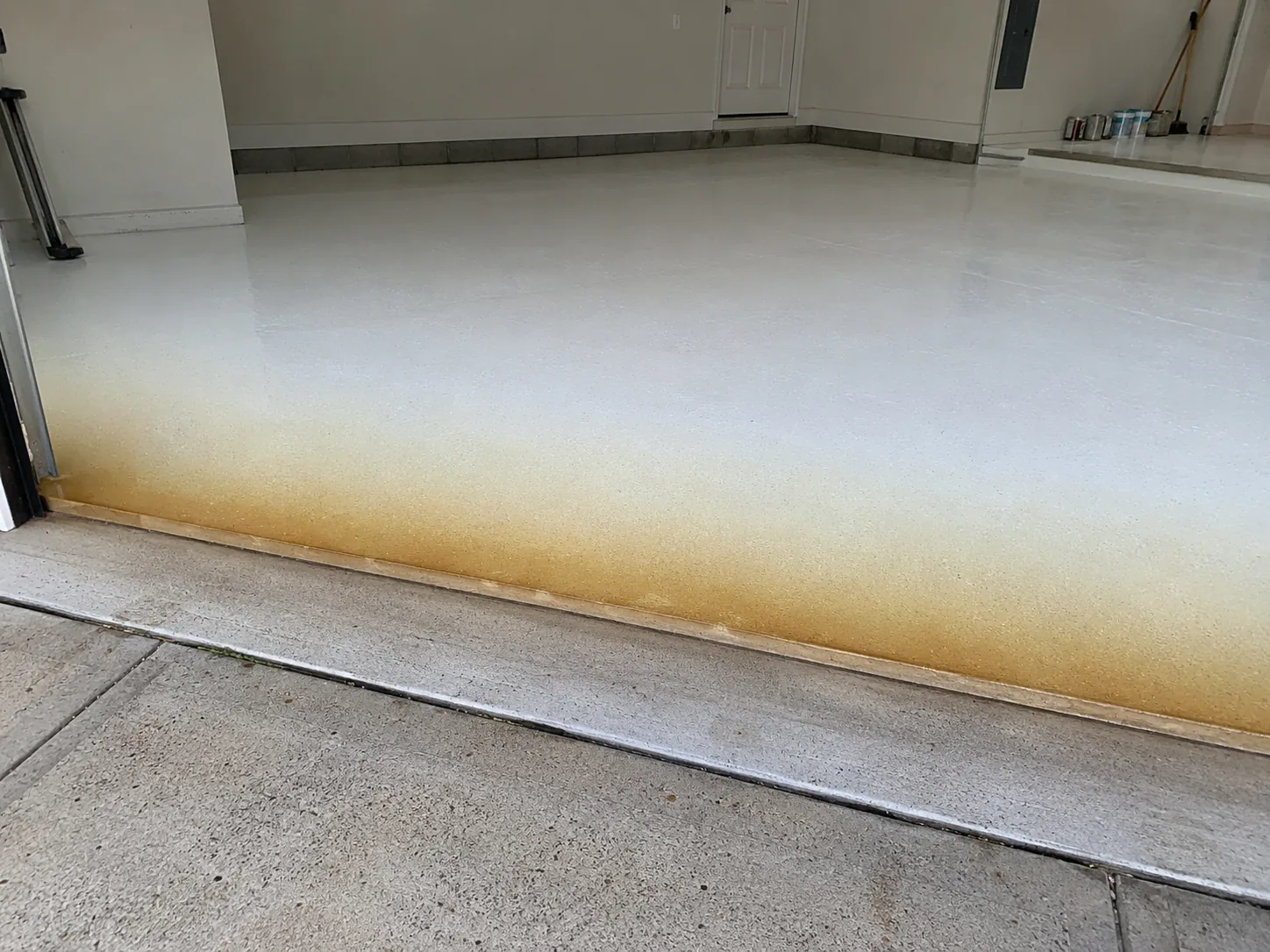
Kansas climate angle
Wichita stacks three stresses that punish the wrong stack-up:
- UV at the door. South- and west-facing openings bake the threshold. Epoxy without an aliphatic polyaspartic or polyurethane clear will chalk and yellow. That is chemistry, not bad luck.
- Freeze-thaw and salt. Chlorides and water exploit thin, porous, or poorly bonded films. Build thickness and surface prep matter as much as brand names.
- Hot tires on summer afternoons. Soft or under-cured films pick up in parking pads. Faster-curing polyaspartic topcoats help when the full system is allowed to reach its rated properties before you park.
Expansive clay and temperature swings also reward systems that honor joints and use appropriate crack fillers — often polyurea — rather than bridging everything rigid. See why coatings fail here and crack repair.
Why not polyaspartic all the way through?
You can build an all-polyaspartic floor, and for some schedules it is the right call. Costs more, and the crew gets a short open time — hot Wichita summers make that window even tighter. Many shops therefore use epoxy or polyurea where working time helps, then cap with polyaspartic where UV and abrasion live. That is specification, not upselling.
Why not epoxy all the way through?
All-epoxy floors still exist and can look fine indoors away from UV. In a garage with an open door and hot tires, an epoxy wear surface is the layer that ages first: ambering, tire marking, earlier recoat. If budget forces an epoxy-forward system, be honest about UV near the opening and about cure time before parking.
Aromatic vs aliphatic (why the topcoat decides UV)
Aromatic resins are typically tougher or cheaper in the body but yellow in sunlight. Aliphatic resins resist ambering. Marketing that says “polyurea” or “epoxy” without saying aromatic vs aliphatic is incomplete. Ask what is on top within three feet of the door tracks.
Cure chemistry in practical terms
Epoxy often wants a longer undisturbed cure before vehicle traffic — HomeGuide notes epoxy jobs that can take up to about a week to fully cure in some cases, versus polyaspartic systems often measured in about 1–2 days and polyurea often around a day-class return in their summary tables. Weather, film thickness, and product data sheets override any blog generalization; your written quote should carry the schedule you can hold us to.
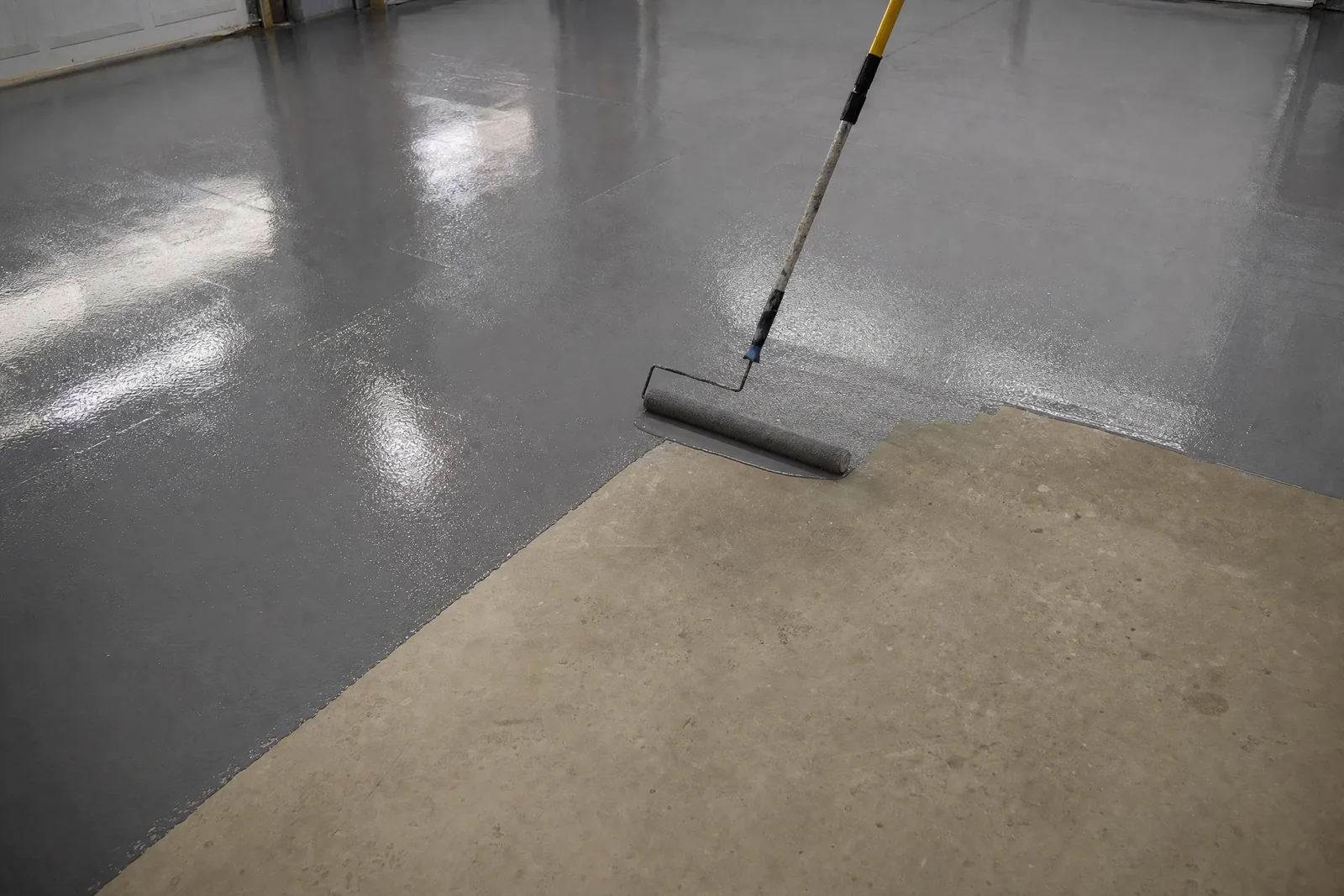
Cost in context
Published national bands often place polyaspartic above basic epoxy on day-one price (HomeGuide’s $5–$12 vs $4–$10 style framing). DIY kits skew perceptions because they price materials only. Over a decade, one durable install can beat two cheap peels — especially after you factor emptying the garage twice. Run the numbers on the cost guide and DIY vs pro pages.
When plain epoxy is still the right call
- Interior rooms with no UV and light wheeled traffic
- Some basement utility areas where moisture mitigation and budget dominate
- Certain shop zones where a pigmented epoxy body under a specified chemical-resistant topcoat is the industrial standard
Garages that see sun, salt, and daily parking are usually hybrid or polyaspartic-forward, not bargain epoxy paint.
Questions to ask any contractor
- What is the body coat and what is the topcoat — by chemistry, not brand nickname?
- Is the topcoat aliphatic?
- What moisture test do you run?
- What is the vehicle cure window in writing?
- Is grinding included, or is “prep” just etch and sweep?
Product pages: polyaspartic & polyurea coatings, flake systems, solid color epoxy.
Hybrid systems in plain language
Think of the floor as layers with jobs:
- Concrete profile — diamond-ground so something can lock in.
- Primer / body — wets the profile, builds thickness, carries color or holds flake. Epoxy and polyurea shine here.
- Broadcast — flake or quartz for looks and hide.
- Clear wear coat — takes UV, abrasion, tire heat. Aliphatic polyaspartic is the usual Wichita answer at this layer.
Sales language that collapses all four into “we do epoxy” or “we do polyurea” hides the layer that actually fails first. Ask what each layer is.
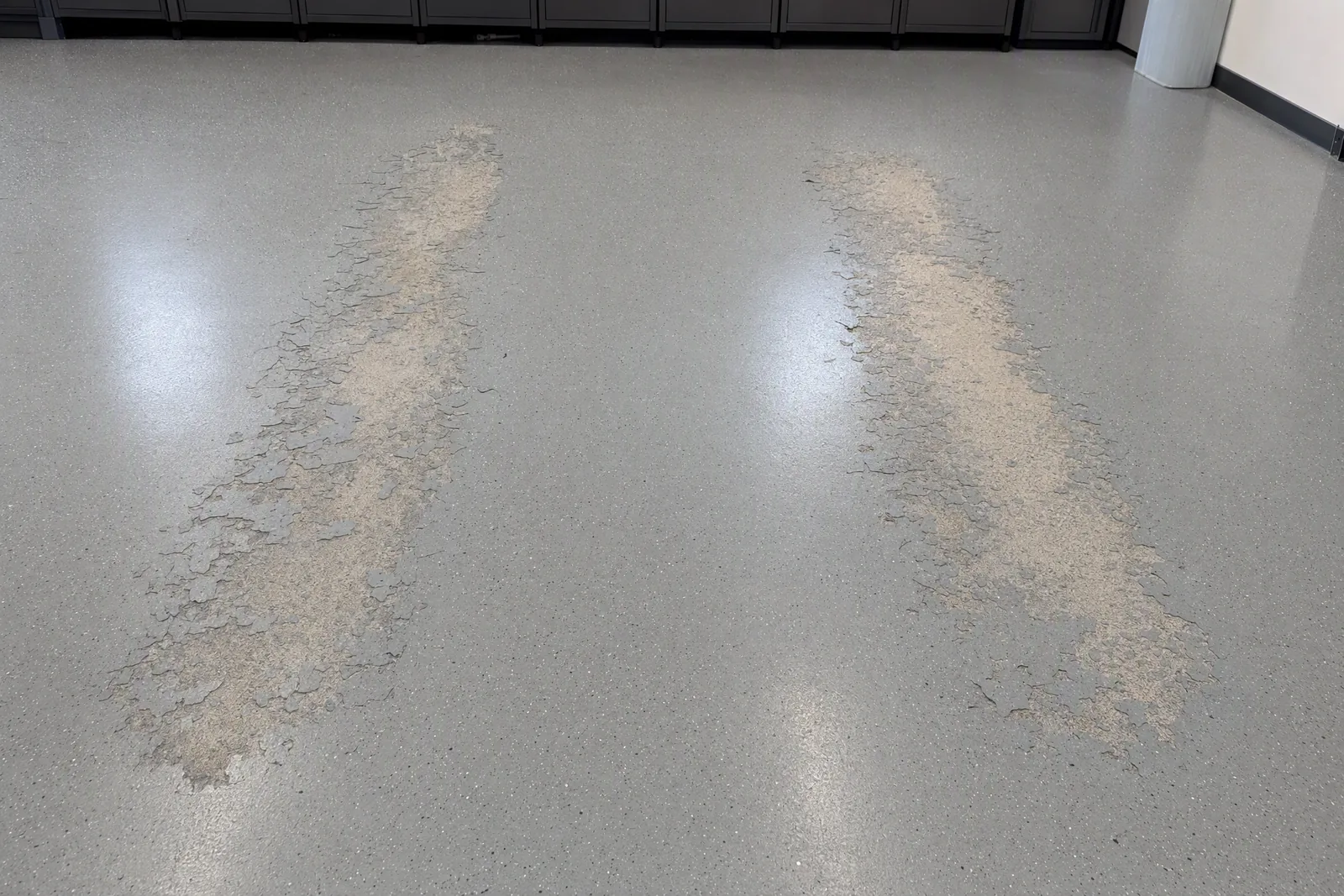
Hot tire pickup: chemistry plus cure
Pickup happens when a hot tire softens or mechanically shears a film that never reached full properties, or that was too soft for the load. Polyaspartic topcoats are popular partly because they develop hardness quickly, but parking early still ruins good product. Temperature of the slab, film thickness, and product TDS win over mythology. If a previous floor failed in the parking pads only, read that as a topcoat/cure problem until proven otherwise — see also repair and recoating.
Flexibility, cold snaps, and brittle films
A January cold snap on a poorly chosen hard film over a moving crack is how you get reflective cracking. Semi-rigid polyurea crack fillers and honoring control joints matter more than arguing epoxy vs polyaspartic on a forum. The wear coat can be hard; the crack detail still has to move a little.
Shop floors and basements use different weightings
A shop floor may prioritize chemical resistance and impact over UV. A basement prioritizes vapor drive. The comparison table above is garage-centric; we re-weight the same chemistries when the room changes.
Putting it together for a Wichita garage
Most residential jobs we recommend: mechanical grind, moisture check, epoxy or polyurea body, full flake if desired, aliphatic polyaspartic clear, written cure schedule. That stack answers the search phrases polyaspartic vs epoxy and polyurea garage floor coating with a system instead of a single buzzword. If your schedule cannot spare multi-day parking elsewhere, we bias the stack toward faster-cure topcoats and tell you the premium up front via the cost page.
Common questions
What is the difference between polyaspartic and polyurea?
Related families; polyaspartic esters are often discussed as a polyurea-adjacent technology with more installer-friendly working time than some pure polyureas. Formulations vary. Ask for the data sheet, not just the category name.
How long does epoxy floor last vs polyaspartic?
Guides often cite shorter lives for light water-based epoxy and longer 10–20+ year bands for polyurea/polyaspartic-class systems with proper prep (HomeGuide). Abuse, UV, and moisture can collapse any of those numbers.
Can you put polyaspartic over old epoxy?
Sometimes, if the old film is sound, clean, and profiled. Peeling or weak epoxy must come off. See removing failed coatings and repair and recoating.
Is polyaspartic worth the extra cost?
If you need UV stability, hot-tire performance, and faster parking, often yes. If the space is dark, dry, and low-abuse, a well-built epoxy-forward system may be enough. We quote to the slab, not to a slogan.
Which is better for winter salt?
A fully bonded system with adequate film build and a tough topcoat beats any label. Salt punishes pinholes and peel edges regardless of resin family.
Ready for a floor that survives a Kansas winter?
Free on-site measure, honest assessment of your slab, and a written quote you can hold us to.
Call 316-799-3692 Request a quote online