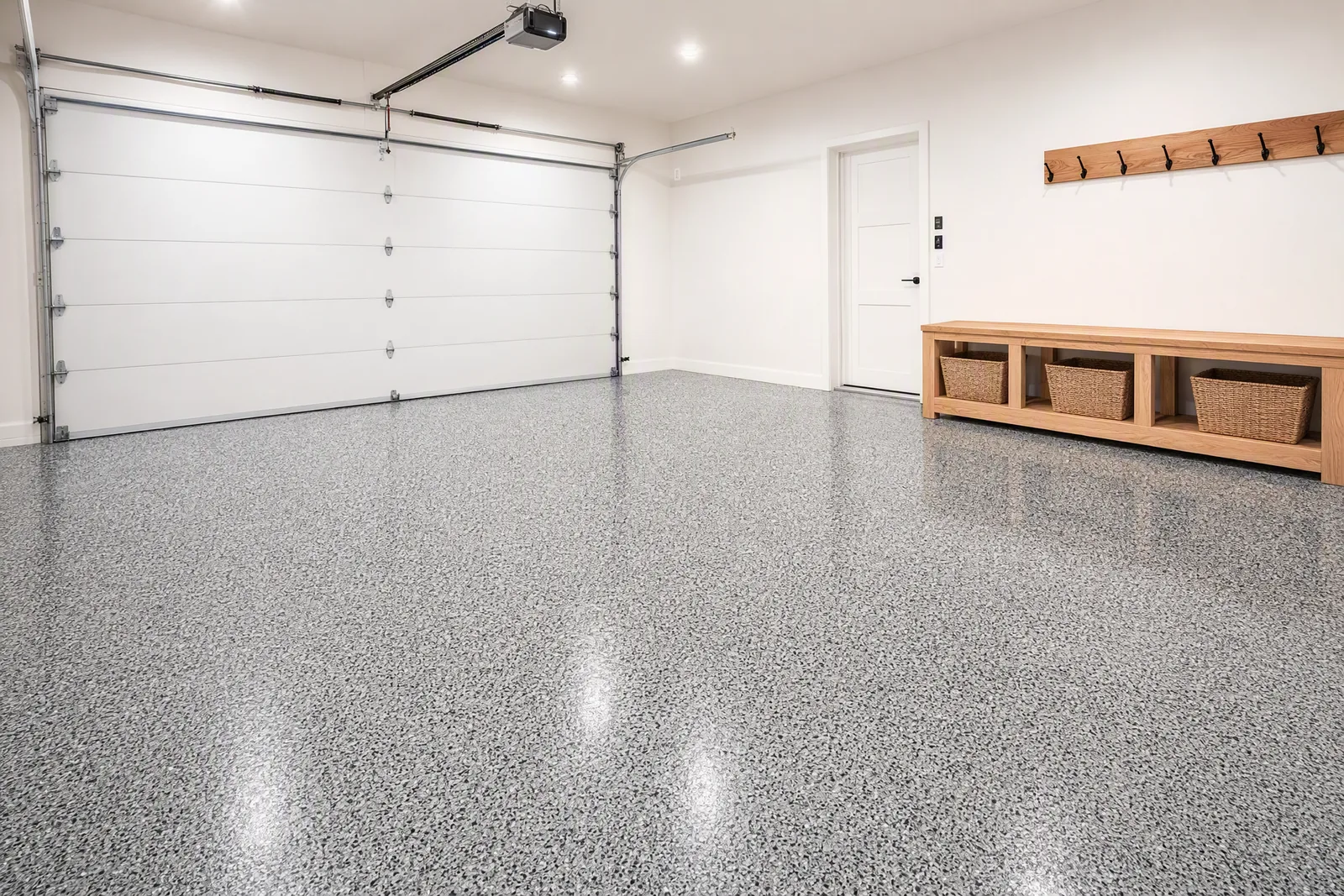
When people search for a garage floor coating or an epoxy garage floor, they usually want the same thing: a sealed, washable surface that survives hot tires, road salt, and the next decade of parking. In Wichita, that means matching the chemistry to a Kansas climate — freeze-thaw winters, magnesium chloride tracked in from Sedgwick County roads, and summer heat that softens a weak film under a parked car.
An epoxy floor coating is not paint. It is a two-part thermosetting resin that locks into a mechanically opened concrete profile. Done right, it becomes part of the slab. Done wrong — acid etch only, no moisture test, thin water-based kit — it becomes a plastic sheet waiting for the first hot tire to peel it. That distinction is why garage floor resurfacing and professional coating are different jobs from rolling on a big-box kit.
This guide covers the systems we actually install, the prep that decides whether they last, how Kansas weather attacks a garage slab, and how to choose between epoxy, polyaspartic, polyurea, flake, and metallic finishes. For numbers, see our garage floor coating cost guide. For chemistry trade-offs, see epoxy vs polyaspartic vs polyurea.
What “garage floor coating” actually means
Search results mix several products under one phrase. Useful categories:
- Solid-color epoxy or polyurea body coat — clean, bright, utilitarian. Common in shops and warehouses; also fine in a working garage. See solid color epoxy.
- Full-broadcast flake (chip) systems — the residential default. Vinyl flakes hide dust, tire marks, and small repairs under a clear topcoat. See flake epoxy floor systems.
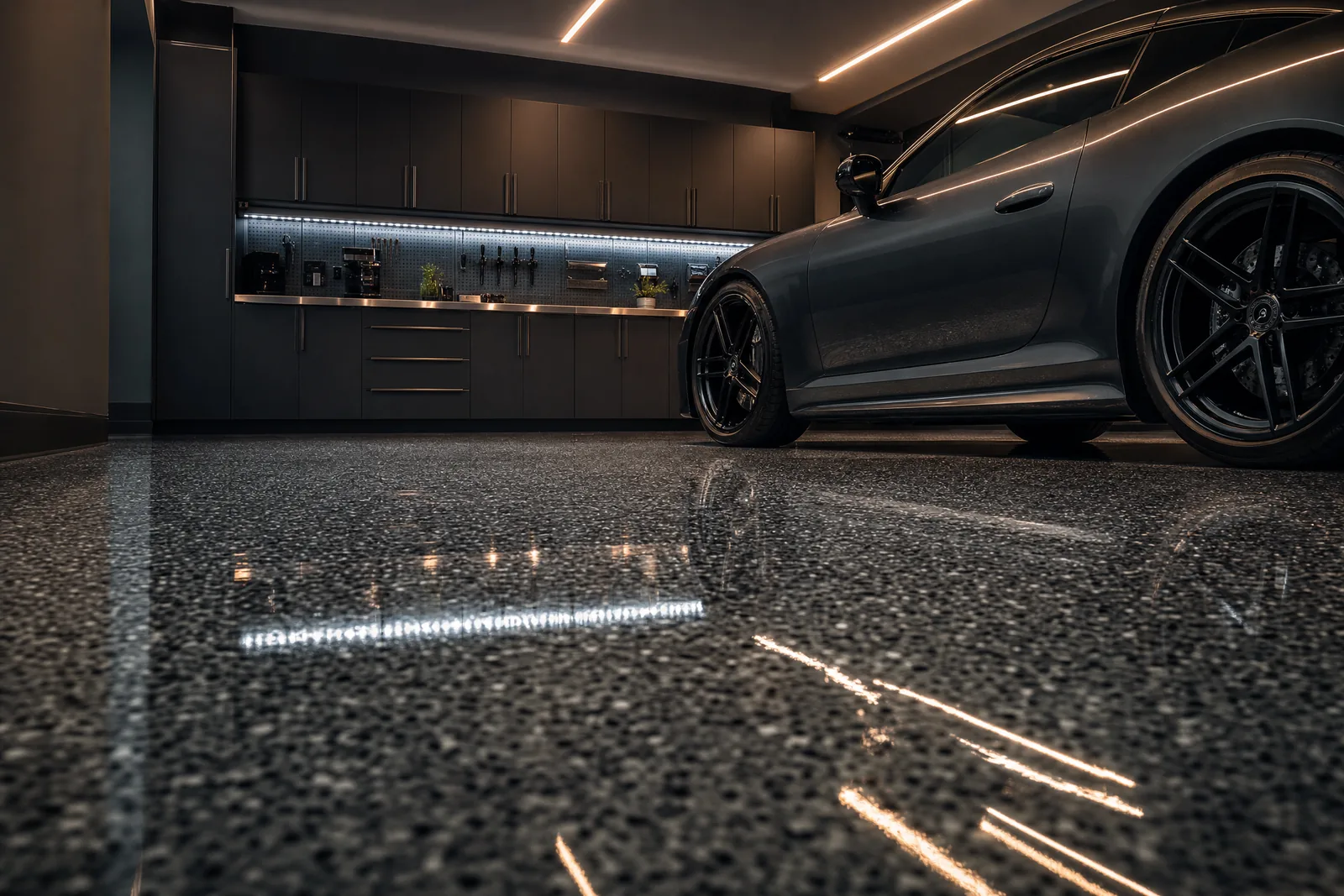
- Metallic epoxy — pigment swirls for show garages and man-caves. Higher skill, higher cost, more UV sensitivity if the topcoat is wrong. See metallic epoxy floors.
- Quartz / anti-slip — heavier texture for wet entries, ramps, and commercial kitchens. See quartz and anti-slip floors.
- Polyaspartic or polyurea-forward systems — faster cure, better UV and abrasion at the topcoat. Often paired with an epoxy or polyurea build coat. See polyaspartic and polyurea coatings.
When someone asks for the best garage floor coating, the honest answer is: the system that matches your UV exposure, tire heat, moisture condition, and how long you can keep cars out during cure — not a brand name on a sample board.
Systems we install for Wichita garages
Hybrid epoxy + polyaspartic (most residential floors)
Body coat for build and bond, full flake broadcast, then an aliphatic polyaspartic clear. You get epoxy’s working time and film build with a topcoat that resists UV ambering and hot-tire pickup better than epoxy alone. This is what most homeowners mean by an epoxy garage floor, even when the topcoat is not epoxy.
Polyurea / polyaspartic-forward
Faster return to service, strong abrasion resistance, good for owners who cannot leave cars out for a week. Cure windows are shorter; the crew has less open time. Cost typically sits at the higher end of national coating ranges.
Metallic show floors
Gorgeous when the slab is flat and dry and the topcoat is UV-stable. Not the first choice for a daily-driver garage that sees salt all winter unless you accept more visible wear and a stricter care routine.
Solid color for work spaces
Ideal when you want brightness and cleanability more than flake camouflage — detached shops, pole barns, and light commercial bays. Cross-link with our shop floor epoxy page if the space is a working shop rather than a house garage.
Preparation decides longevity
Every failed floor we tear off shares the same story: poor prep. An epoxy coating garage floor job that skips mechanical profiling is gambling.
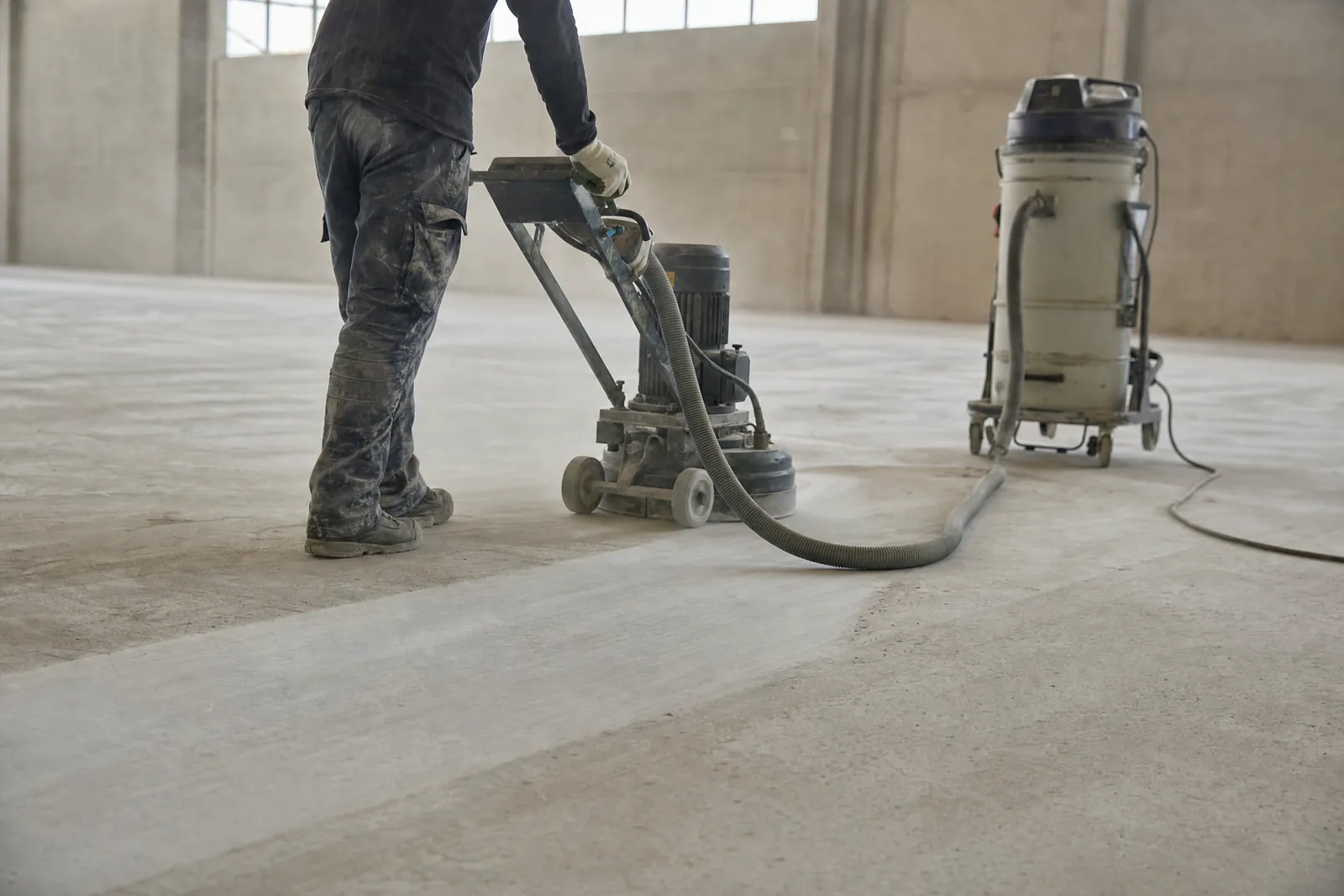
- Diamond grinding — opens the surface profile so resin can key in. Acid etching alone is not enough for modern high-solids systems on a Wichita garage slab that has seen sealer, paint, or tire dressing. See grinding and surface prep.
- Moisture vapor testing — slabs on grade push vapor. Coat over high MVER without mitigation and you get blisters and delamination. See moisture testing and vapor barrier.
- Crack and spall repair — dormant cracks get routed and filled with semi-rigid polyurea; spalls get patched and ground flush. Active settlement cracks are a different conversation. See crack and spall repair.
- Old coating removal — peeling paint or failed DIY epoxy has to come off. Coating over failure transfers the failure upward. See removing failed coatings.
If you want the short version of why floors fail here specifically, read why garage floor coatings fail in Wichita.
Kansas climate: freeze-thaw, salt, and hot tires
South-central Kansas is hard on garage floors for three stacked reasons:
- Freeze-thaw. Water in the slab and at the surface expands when it freezes. Uncoated or poorly sealed concrete spalls over winters. A bonded coating keeps water out of the near-surface paste — if edges and joints are detailed correctly.
- Road salt and de-icer. Sedgwick County uses salt and magnesium chloride. That slurry rides home on wheel wells and drips onto the slab. Chlorides attack unprotected concrete and exploit pinholes in thin films.
- Hot tire pickup. Summer asphalt heat plus a soft or under-cured film equals tire marks and peeling in parking pads. Harder aliphatic topcoats and full cure before parking matter more here than in mild coastal climates.
Neighborhoods from east Wichita through Andover, south through Derby and Haysville, and west through Goddard and Maize see the same pattern: bare grey dusting, oil shadows in parking pads, and DIY kits peeling in sheets after one or two summers.
How long does a garage floor coating last?
National cost guides commonly cite roughly 3–20+ years depending on system and use — water-based epoxy at the short end, solid epoxy and polyurea/polyaspartic systems longer when prep is right (HomeGuide). In a residential Wichita garage with diamond-ground prep, moisture control, and a UV-stable topcoat, a full-broadcast flake system is typically a long-service floor; the first refresh is often a topcoat renew rather than a full teardown. Abuse, standing oil, metal shavings, or parking before cure all shorten that window. For a side-by-side on chemistry and lifespan, see epoxy vs polyaspartic vs polyurea.
The install process, start to finish
- On-site measure and quote — square footage, slab condition, moisture plan, flake or color choice, written scope.
- Empty the garage — you clear vehicles and storage; we need wall-to-wall access.
- Grind, repair, clean — dust-extracted grinding, crack work, vacuum.
- Primer / body coat — resin rolled or squeegeed to the profile.
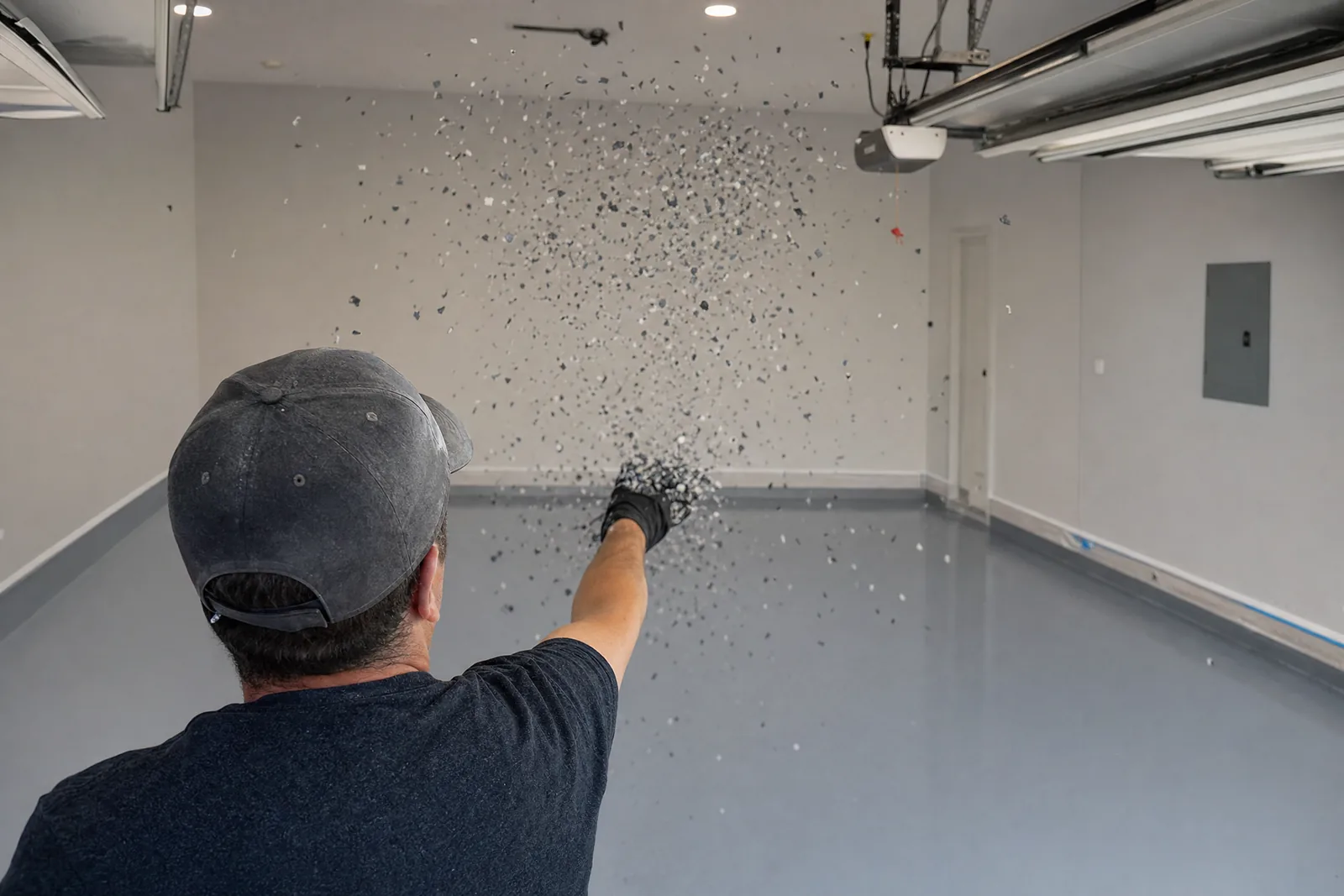
- Broadcast — flake to refusal on full-broadcast jobs; excess scraped after cure.
- Clear topcoat — usually polyaspartic; optional grit for traction at the door threshold.
- Cure window — foot traffic often same day or next; vehicles per the written schedule (polyaspartic systems are typically faster than classic epoxy).
Day-of expectations: what to expect during install. Care after: care, maintenance, and warranty.
Garage floor coating vs paint vs DIY kits
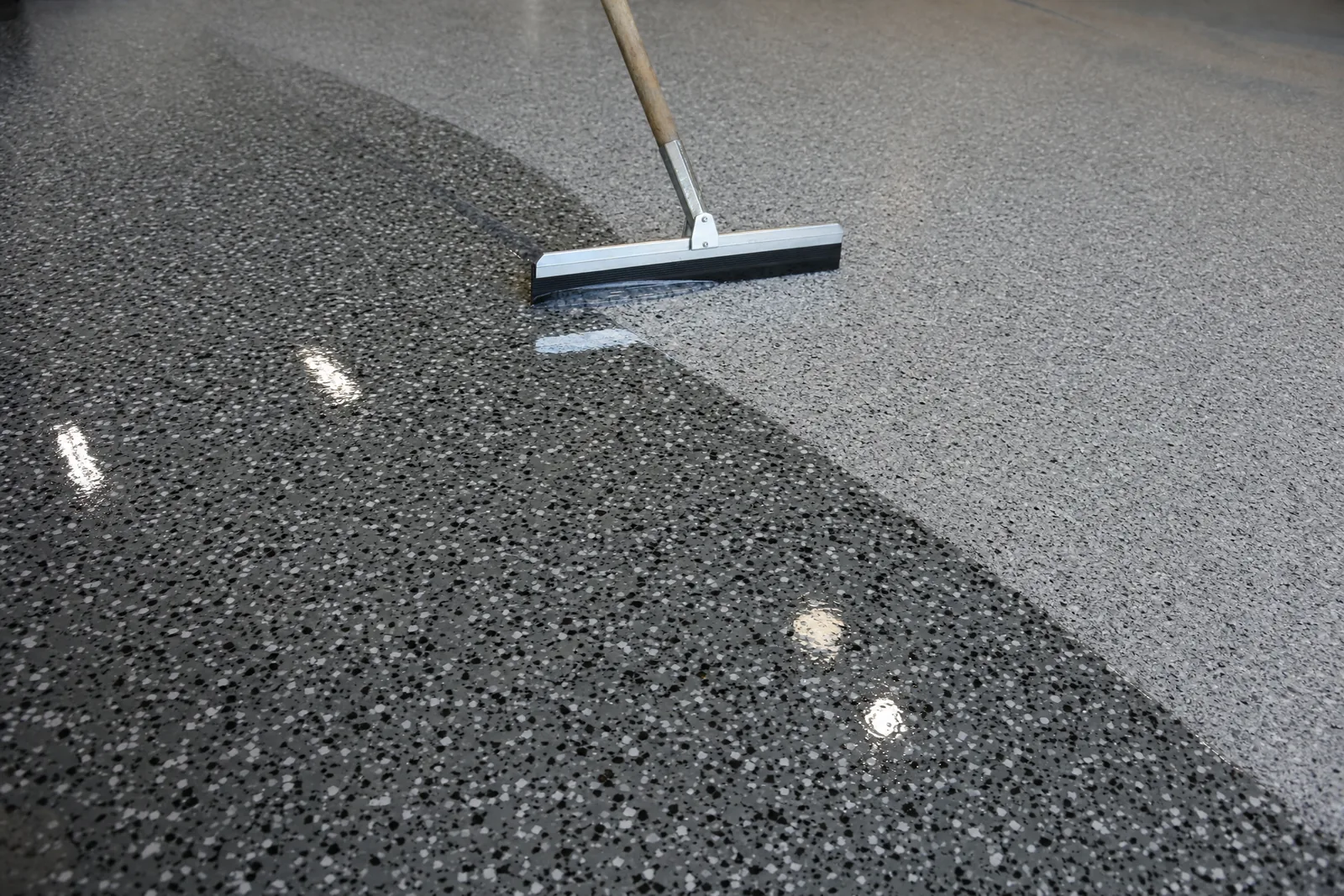
Garage floor paint and big-box epoxy kits cost less up front. Angi notes DIY kits often land roughly in the $2–$5 per square foot materials range, while professional installed epoxy commonly spans a wider national band. Kits usually lack mechanical grind, moisture testing, and a true aliphatic topcoat. In this climate that shows up as peeling in parking pads and ambering near the open door. A fair comparison is cost per year of service, not day-one price — detailed in our DIY kits vs professional guide and the cost page.
Where else these systems go
The same prep logic applies to basement floor coatings (moisture is the headline), shop and warehouse floors (chemical and impact loads), and exterior work only when the topcoat is UV-stable — see patio and pool deck coatings. Residential-focused owners can also start from residential garage floors.
Communities we coat around Wichita
- Derby garage floor coating
- Andover garage floor coating
- Goddard garage floor coating
- Maize garage floor coating
- Full service area list (Bel Aire, Park City, Haysville, Valley Center, and nearby south-central Kansas)
Common questions
How long does an epoxy garage floor last?
With proper grinding, moisture control, and a UV-stable topcoat, residential flake systems commonly deliver many years of service before a topcoat refresh. HomeGuide cites broad national lifespan bands from a few years for light water-based films up to 10–20+ years for polyurea/polyaspartic-class systems. Prep quality matters more than the brand sticker.
Is epoxy or polyaspartic better for a garage?
In Kansas, a hybrid is usually the practical answer: epoxy or polyurea for build, polyaspartic for the wear surface. Pure epoxy can amber in sunlight and soften under hot tires. All-polyaspartic works well but costs more and cures very fast. See the full comparison page.
Can you coat a cracked garage slab?
Dormant cracks: yes — route, fill, grind flush, then coat. Active movement from settlement: coating alone will telegraph the crack again. We flag that at the measure.
How long before I can park on it?
Depends on the system and temperature. Many polyaspartic topcoats allow faster vehicle return than classic epoxy, which can need several days. You get the cure schedule in writing on the quote.
Do you need to move everything out?
Yes. Wall-to-wall grinding and broadcast need a clear slab. Plan a day or two for staging vehicles and storage.
What about moisture in the slab?
We test. High vapor drive needs mitigation or a different system. Skipping that step is a common reason coatings blister.
Ready for a floor that survives a Kansas winter?
Free on-site measure, honest assessment of your slab, and a written quote you can hold us to.
Call 316-799-3692 Request a quote online